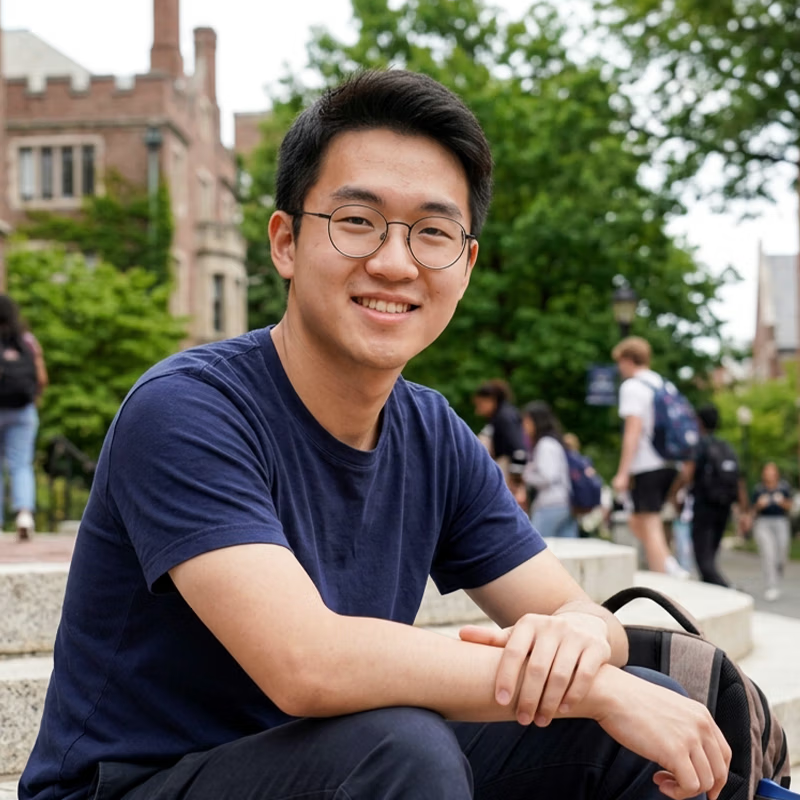
Student Case Study

First-Gen Strategic Navigator

Kenji used structure and guidance to turn uncertainty and late timing into multiple acceptances.

Kenji. M

Attending:
UCLA DGSOM

Resourcefulness, Directed

Kenji S. never lacked drive. What he lacked was a clear map through one of the most complex admissions processes in higher education. As a first-generation applicant balancing late timing, uncertainty, and high stakes, Kenji’s story shows how structured guidance and honest strategy can turn resourcefulness into real choice.

"Having structure took away stress I didn’t even realize I was carrying."

Growing up in Boston, he navigated the premed path as a first-generation college student. He brought strong communication skills, leadership experience, and a deep connection to serving the underserved, but entered the cycle with limited insight into how complex and demanding the admissions process would be.

Academics:
GPA:
3.9
MCAT:
514
Undergraduate Institution:
Small Liberal Arts College
Work & Activities
  • 2,000 hours as a Clinical Research Coordinator in Anesthesia.
  • >1000 hours in wet lab research that showed growth but lacked impact.
  • Deep work and leadership with their religious community.
"It felt more like people actually wanted to hear my story, not just edit it once."
-
Kenji. M
Results

From uncertainty to choice

Kenji entered the cycle unsure he would have options. He exited with five acceptances and the confidence to choose.

Application Volume
Schools applied to:
36
Completed applications:
34
Secondary submissions:
34
Interview Invitations
Total interviews:
7
Including:
  • UMass
  • Loyola
  • Rush
  • UCLA
  • Kaiser
  • Drexel
Acceptances
Total acceptances:
5
Including:
  • Rush University
  • UMass
  • Loyola
  • Drexel
  • UCLA

Confidence through clarity

Structure transformed stress into control.

The Challenge

Before

After

Strong Voice, Unclear Direction
Kenji had compelling experiences and a strong passion for helping others, but the written application didn’t fully reflect his strengths.
Kenji’s narrative was sharpened to match his verbal confidence, creating alignment across essays, interviews, and activities.
Timing Anxiety Spiral
Late MCAT timing and application submission created persistent stress and self-doubt throughout the cycle.
Data-driven reassurance and clear context helped Kenji reframe timing concerns and stay focused on execution rather than panic.
Experience Without Framing
Work and activities were meaningful but not positioned to show growth or intentional progression.
Experiences were reframed to highlight resourcefulness, leadership, and first-generation resilience.
Transactional Expectations
Initially unsure whether consulting would feel impersonal or one-off.
Experienced longitudinal, personalized support that made the process feel collaborative and human.

In Kenji’s Words

Lessons on timing, support, and fit.

What surprised you most about the application process?

I didn’t realize how big the scope was. I knew it would be difficult, but the sheer volume of decisions, writing, and coordination was more than I expected.

Why did you choose PreMed Catalyst?

I liked that it felt personal. It didn’t feel like a one-and-done service. It felt like people actually cared about hearing my story and helping me tell it well.

What changed the most for you during the process?

My understanding of how to use my experiences. I learned that it wasn’t about doing more, but about explaining what I had already done in a clearer, more intentional way.

What advice would you give future applicants?

Use your resources. You don’t get extra points for doing everything alone. Getting help is part of being strategic, not weak.

Ready to get into your dream medical school?