

September 3, 2026
Written By
Dr. Michael Minh Le
Subscribe to the Premed Catalyst Newsletter
Here’s the brutally honest truth: most premeds have no idea what counts as "clinical hours" for med school until an admissions committee rejects them. By then it's too late to fix it.
This article breaks down exactly what counts as clinical hours in 2026 and what doesn't, so you’re not left blindsided. We'll cover how many hours you actually need, the mistakes that quietly sink strong applications, and how to turn raw hours into a story admissions committees remember.
Knowing what counts is half the battle. The other half is knowing how to write about it once you've done it. Our Application Database gives you access to 8 real AMCAS applications from students accepted into top med schools. It includes personal statements, Most Meaningful entries, and activity descriptions.
You'll see exactly how accepted applicants framed their own clinical hours, down to the language they used to turn routine shifts into compelling proof of readiness.
It’s completely free inside our student portal. Create an account here.
I see it every year. Most premeds can't tell you what actually counts as clinical experience.
They think "clinical" means anything inside a hospital. Or that shadowing and scribing and volunteering are all the same bucket. They fill out their AMCAS Work and Activities section guessing and hoping.
And that’s exactly how students get rejected even when they think they’ve done everything right.
So before you count another hour, you need to know what you're actually counting.
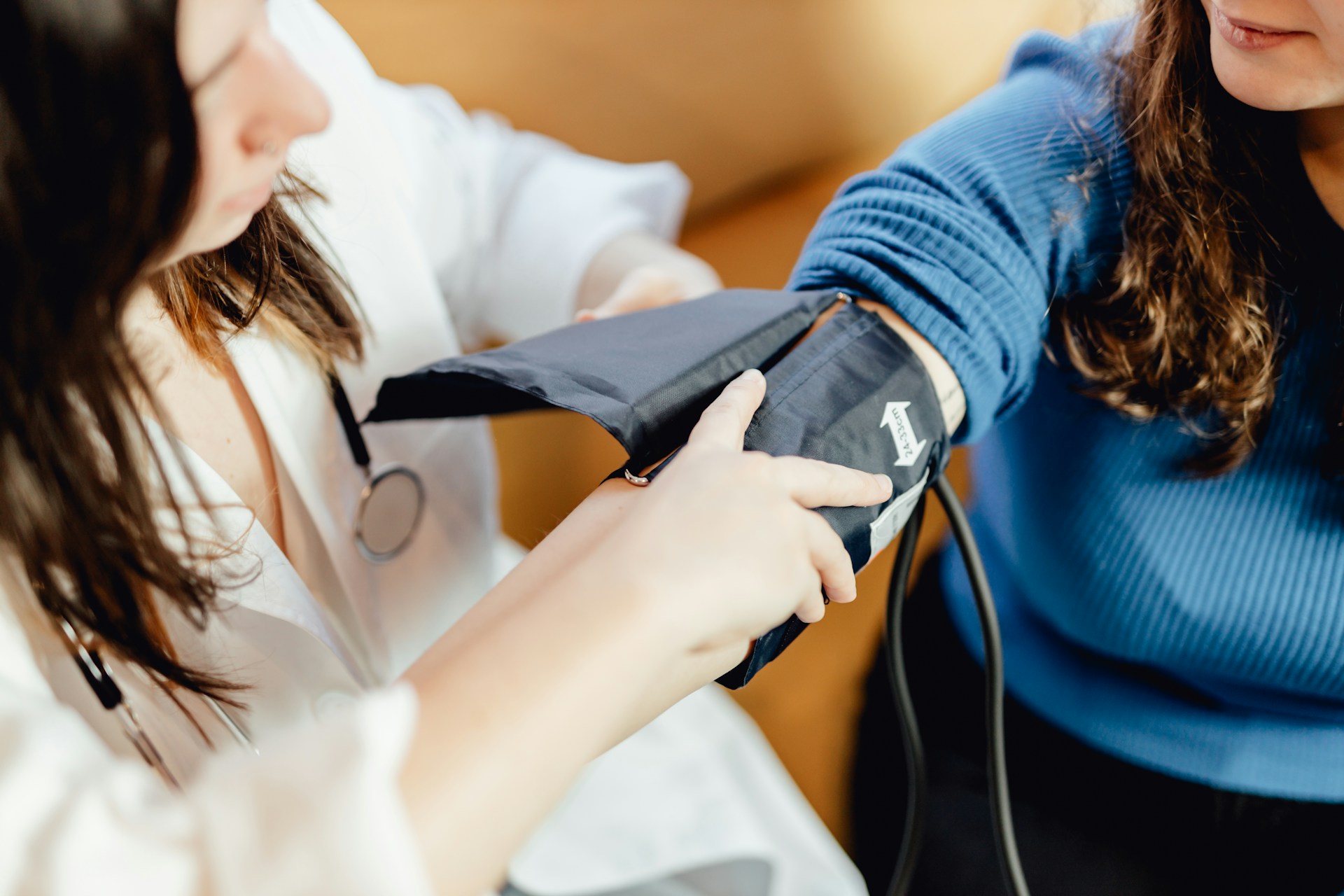
Direct patient care means you were in the room, doing something, with a patient. But don’t just take the phrase “in the room” and say that’s enough. The “doing something” part is the most important.
Taking vitals. Drawing blood. Rooming a patient. Assisting with a procedure. Sitting with someone at the bedside because they're scared and you didn't walk away. That's direct patient care.
The best way to tell whether an experience counts as clinical is whether it involves some aspect of direct patient care. That's the filter. Run everything through it.
Here's the distinction that gets lost: meaningful interaction isn't a task. It's a quality.
A hospice volunteer holding someone's hand while they process a diagnosis isn't performing a clinical task. No vitals, no procedures. But that's meaningful clinical interaction.
Now compare that to someone doing 200 hours of "direct patient care" as a phlebotomist at a high-volume draw station, in and out, arm, needle, next patient, forty times a shift. Technically direct patient care every time. But if you can't remember a single patient by the end of the shift, you didn't walk away with much beyond the technical skill.
Sustained, meaningful engagement over time is exactly what gets students accepted. It’s not because the hours pile up, or because it technically qualifies as clinical. This type of sustained engagement is what produces the moments you can actually speak to in your application.
Now the one everyone argues about. Does scribing count?
The answer is yes, scribing is clinical experience. The AMCAS Work and Activities section lists medical scribing directly under clinical experience, alongside EMT work and hospice volunteering.
So the "does it count" question is settled. The real debate is this: should it carry the same weight as an experience where you're the one treating the patient?
One side says you're at the bedside, you're interacting with physicians and the care team, you're inside the encounter. To them, that means it should carry the same weight as any other experience included in your application.
The other side says when you’re a scribe, you're documenting the encounter with no direct interaction or examination of the patient yourself. You're in the room, but you're not in the moment. To them, that means it’s fine to have in your application, but it won’t impress AdComs if it’s all you have.
I agree more with the latter. The trap isn't scribing. The trap is scribing as your only clinical activity for two years and calling it a full narrative. Eight hundred hours of documenting vitals while a physician talks isn’t going to show AdComs who you are, what you care about, and the type of physician you’re becoming. Leave those things vague, and rejection is really the only option on the table.
So, bottom line, sure do the scribing, but you need to choose other clinical experiences to round out your application if you want to look competitive.
If you're still not sure whether something counts as clinical hours, here's an example list. These are the roles that consistently qualify:
You were in a hospital. You wore scrubs. You stood near sick people. That’s great but none of that makes it a clinical experience. AMCAS doesn't grade on proximity. It grades on category, and category is defined by what you actually did.
Here’s exactly what doesn’t count as clinical hours.
Shadowing feels clinical because you're in a hospital near patients. But shadowing is not clinical experience. It's its own category altogether.
In the AMCAS Work & Activities section, shadowing is separate from the two clinical experience categories: community service/volunteer medical/clinical, and paid employment medical/clinical.
Translation: shadowing is purely observational, not actual patient interaction.
But don’t misread this as "shadowing doesn't matter." Shadowing is its own non-negotiable category of a competitive application. What I’m saying is if you log 100 hours of shadowing and call it clinical experience on your application, you've mislabeled it. An AdCom reviewing your AMCAS categories will know it and likely set your app aside.
Research matters, but pipetting samples and running gels doesn't put you anywhere near a patient.
Just like shadowing, AMCAS has a distinct Research/Lab category that’s separate from clinical experience. That’s because research teaches you something different than direct patient care does. It teaches you the scientific method and how discovery actually works.
The confusion happens when premeds work in a lab that's technically inside a hospital and assume proximity counts. It doesn't. If you never interacted with a patient, observed a physician's clinical reasoning, or had a role in someone's care, you were doing research.
Log it as research.
This is the one that stings the most, because it feels productive.
Administrative roles like front desk check-in or pure stocking and filing usually belong in a different category because they don't clearly show patient-facing work. Scheduling appointments, answering phones, restocking supplies, and entering data are all real jobs, and all are inside a healthcare building, but none of it is clinical.
The same goes for most remote and virtual roles. Virtual shadowing on its own will not substitute for in-person clinical exposure, and it gets filed under shadowing or "other experience" anyway.
If you never had to be physically present for a patient, if the entire role could've been done from your couch, AdComs won’t read it as clinical no matter how you describe it.
Now that you know what counts, don't go collect all of it. That's just a different trap to fall into.
What you really need to do is choose the right experiences for you that help you build a narrative that you can actually talk about in your application.
Here’s exactly how to choose:
Start with access, not preference. You might want to be a scribe in a Level 1 trauma center. If the only opening is at an urgent care three miles from campus, take the urgent care. Sustained engagement over time is the norm among successful applicants, not the prestige of the building you worked in. A year of steady hours somewhere unglamorous beats three months of chasing the perfect placement that never opens up.
Pick one direct patient care role and go deep, not wide. Bouncing between five different clinical gigs for a month each gives you five thin stories that likely don’t even connect. AdComs are trying to understand what you care about, but with so many short experiences, all you’re showing them is that you just want to check the boxes. Choose one opportunity that aligns with your interests and really spend meaningful time there.
Layer in meaningful interaction; don't substitute it. If your direct patient care role is task-heavy and low on real conversation like phlebotomy, then pair it with something slower like hospice. One gives you competence. The other gives you a story.
Cut anything you can't speak to. If you can't tell someone what happened during a specific shift, with a specific patient, in a specific moment that changed how you think, then it's dead weight. Better to have 150 hours you can talk about for ten minutes than 500 you can only summarize in one sentence.
Here's the number everyone's still repeating: 100 to 150 hours.
Here's the problem: that number is old. It's been recycled on forums and blogs for years, and it stopped being true a while ago.
Based on what's actually landing interviews right now in 2026, the real range of how many hours you need for med school sits closer to 300 to 2,000 hours. Applicants in that range who applied on time were pulling a median of 7 interviews.
But don't stop reading and go log 2,000 hours of anything just to hit the ceiling. Because here's the part that actually matters: the number was never the point.
You can have 1,000 hours of standing quietly in a hallway. That's not impressive. That's just time. But you can have 300 hours where you actually talked to patients and helped, and you can reflect on how it impacted you. That's impressive.
So aim for 300 as your real floor, not 100. Go higher if the experience is deep and you can speak to every hundred hours of it. But the second you're logging time just to watch the total climb, you've stopped building an application.
Picture this: an applicant has hours on paper and feels covered, but never realizes the hours aren't actually doing the job they think they're doing.
Here's how that happens so you can avoid it.
We need to state it again. It’s really that important and that often missed.
Standing in a hospital hallway for 500 hours doesn't make you 500 hours more competitive. It makes you someone who was present, not someone who was involved. AdComs aren't counting minutes. They're asking whether you had real responsibility.
if nothing about the role changed the longer you did it, you were padding. No new duties, no growing trust from the team, no moment where someone handed you more than they did on day one. That's not depth. That's just volume.
And you’ll have nothing to say in your app or in the interview if your experiences were all about volume.
This one's brutal because it's usually not laziness. It's just bad math. Premeds think they have more time than they do, and then the application cycle arrives, and their clinical section is too thin.
Here's the thing about starting late: it's fixable, but only if you stop waiting for the "right" moment to begin. Waiting for sophomore year to clear up, waiting for the perfect placement, waiting until you feel ready. That’s exactly how a year disappears, and you're left explaining a gap instead of showing growth.
Right now, focus on getting a few months of real, consistent, high-impact work. All you can do is start now.
You can do everything right and still walk away with nothing if you never stopped to process what you were doing. Hours don't automatically become insight. They just become a number, unless you actively turn them into something you can speak to.
The fix is almost embarrassingly simple: write about your experiences while you’re in it. Not the hour count, but the moment that meant something to you. The patient who scared you. The thing a nurse said that stuck. The second you realized you actually wanted this.
Do that consistently, and by the time you're staring down a personal statement or an interview panel, you're not scrambling to remember why any of it mattered. You already know.
You've got the hours. You've avoided the padding. You've reflected along the way. Now comes the part most premeds skip: turning all of that into something an AdCom actually remembers after reading forty other applications that week.
Stop thinking about your clinical hours as a list. Start thinking about them as evidence for one specific claim: this is why I want to be a doctor, and here are the moments that prove it.
That means picking. Out of every shift, every patient, every hour you logged, there are probably three or four moments that actually mattered to your narrative. Those are the only ones that belong in your personal statement, most meaningfuls, and interview answers.
When you write about the moment, make sure it’s specific. Not "I learned the importance of compassion in patient care." That sentence could belong to anyone. Instead: what did the patient say, what did you notice, what did you do, what surprised you about your own reaction. Specificity is what makes a story unforgettable. Vagueness is what makes it disappear into the pile.
And connect it forward. A good clinical story doesn't just describe a moment in the past. It explains why that moment is still steering you. If the story ends at "and that's when I realized I wanted to help people," it's incomplete. Push it further: what did that moment teach you about the kind of doctor you want to be, and how has that shown up again since?
This is exactly why choosing depth over breadth earlier in your clinical experience matters so much. You can't tell a specific, memorable story about a place you spent three weeks. You can tell one about a place you spent a year, where you knew the routine, knew the team, knew the patients well enough to notice when something changed.
Almost none of them can tell you why those hours matter.
That's exactly what our Application Database is for. It's free, it's inside our student portal, and it gives you 8 real AMCAS applications from students who got into top medical schools. You’ll get to see all of it, including personal statements, Most Meaningful entries, and activity descriptions.
Create your free account here and see exactly how to use your experiences to get accepted.