
We share the strategies, timing, and insights used by successful medical school applicants.
"I learned more about how things should be phrased [in my essays] or that it's important to include details. Where can I include details or experiences? [..] They made my story more vivid and clear."

"I think what really helped is seeing how [the Premed Catalyst team] were editing. The first two to three essays I figured out how to adapt to that model."

"I think that [the Premed Catalyst team] was really great. [They] knew what [they] were talking about. Anytime [they] responded to something, [they] were very thorough. Clearly it was good advice."

Each issue is designed around one core goal: helping premeds build momentum before everyone else catches up.
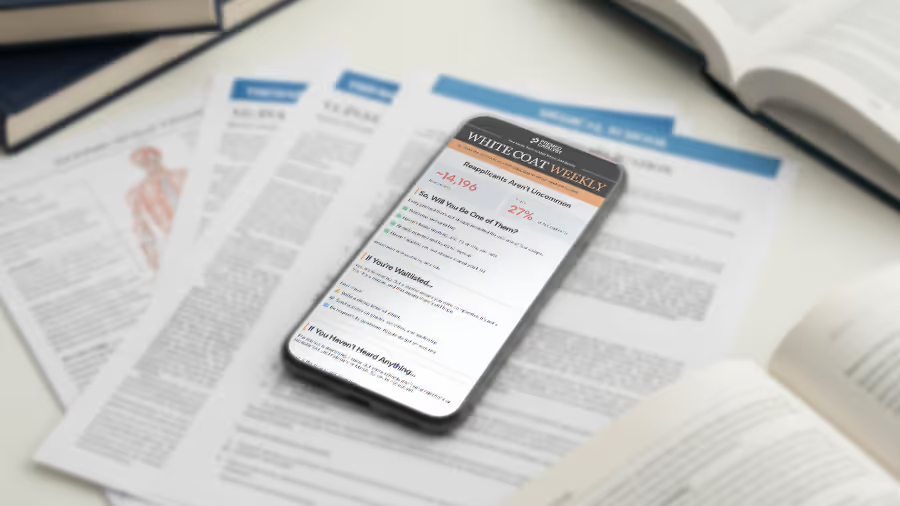
A look at the kind of guidance readers get each week
If you have never seen a real medical school interview from the other side, most of what matters happens beneath the surface. In White Coat Weekly, we break down real mock interviews to show what makes interviewers pause, lean in, or quietly disengage. Small moments, word choices, and framing signal far more than most applicants realize, and those signals are often invisible unless someone points them out.
Many applicants speak in big ideas because they think that sounds impressive. In reality, vague statements fade quickly. White Coat Weekly shows why concrete details matter so much more. When an applicant can describe a moment clearly enough that an interviewer can picture it, feel it, and remember it, the story sticks. That is where credibility and connection are built.
Most “Why Medicine” answers fail because they focus on admiration rather than action. In White Coat Weekly, we unpack why strong answers center the applicant, not the physician they observed. Admissions committees want to understand what you have done, what you have carried, and how those experiences shaped your decision. Watching from the sidelines is not enough. Ownership matters.
Many applicants undermine themselves by relying on what others say about them. In White Coat Weekly, we explain why that instinct backfires. Medical schools are not interested in secondhand praise. They want to see what you believe about yourself and how you can support it with real stories. Confidence here is not arrogance. It is clarity.
